
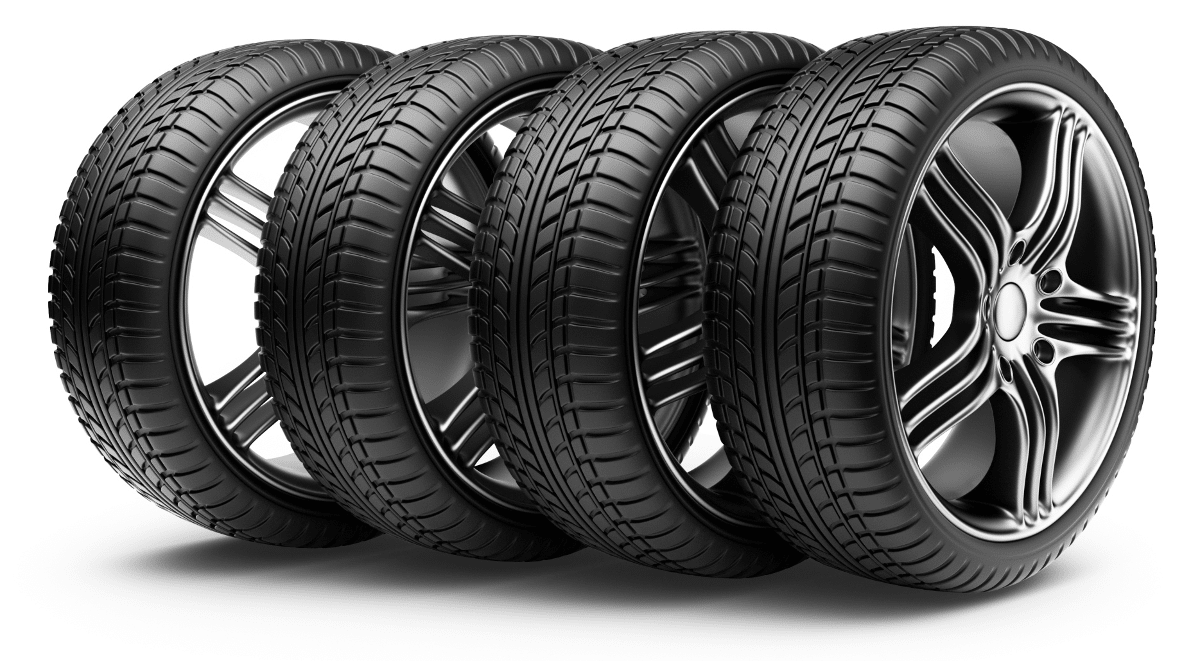
A slight imbalance between the tires and wheels can cause your vehicle to overturn at high speed, especially when making turns. You don’t want that to happen! If you want to drive safely, then you must prioritize your tires and wheels through the following steps:
1. Check tire pressure.
Did you know that most tire-related accidents are caused by under-inflated tires? In addition to decreasing gas mileage and handling, an under-inflated tire can cause a dangerous blowout. Don’t wait for the mechanic to check your tire pressure once in a blue moon, instead do it yourself every month. As per the norm, the owner’s manual will tell you the appropriate pressure for your tires.
Don’t forget, over-inflated tires can be a problem too.
2. Check tread depth
Do you see those imprinted patterns on the tires that leave marks on the ground when you travel on dry soil or mud? Tire treads are critical when you want to drive in any weather condition. Suffice to say, always make sure you check the depth of the tread before you drive that car.
3. Inspect tires regularly
Unlike that short trip to the mall, the tires are more strained during a long road trip. A small crack, bulge, or stuck object on the tire can cause a lot of trouble when you travel halfway across the state or country. Just pray that the stuck glass on your tire doesn’t set off a deflated tire on the highway. Well, you don’t have to leave your safety to chance but you can always inspect your tires regularly.
4. Rotate Tires And Have The Alignment Checked
Make sure you check the owner’s manual to know when you should rotate and align your tires. Most manuals suggest tire rotation and alignment after 5,000 to 8,000 miles. The perks? It keeps your fuel economy in check. Also, the procedure is fairly cheap.
5. Don’t overload your vehicle
One of the most dangerous mistakes you can do is overloading your vehicle. If it doesn’t cause a vehicle imbalance, it will trigger a tire breakdown. To check how much weight your vehicle can support, refer to the owner’s manual or the placard on the door frame.
6. Replace Worn Out Tires Immediately
There is a way to check the state of the tire using a penny. It’s simple; just take a penny out of your pocket, invert the coin and make sure Lincoln’s head is facing upside down. Next, put the penny between the tire treads and observe. If you can see the top of Lincoln’s head when you put the penny between the tire treads, it means you need replacement tires. On the other hand, if you can’t see the top of Lincoln’s head when you place the penny between the tire treads, you’re good to go.
Otherwise, do you know what happens when your tires completely wear out? Hint: a ticking time bomb!
7. Don’t Install Mismatched Tires
Admit it, you’ve probably thought about fixing mismatched tires on your car, or maybe it was your subconscious mind. The problem with installing mismatched tires is that it can upset the handling of your car and even cause a spin-out. In fact, a misfit tire can cause the other tires to wear out at an alarming rate. This can force you to buy a new set of tires a few weeks later.
8. Check Your Spare Tire
Just because you’re certain there is a spare tire in your trunk doesn’t mean it will be useful when push comes to shove. Do you check its air pressure once in a while? Have you confirmed it won’t mismatch when you install it? The last thing you want is to waste money on a tow truck because you forgot to check the condition of your spare tire.
0 Comments
Post Comment